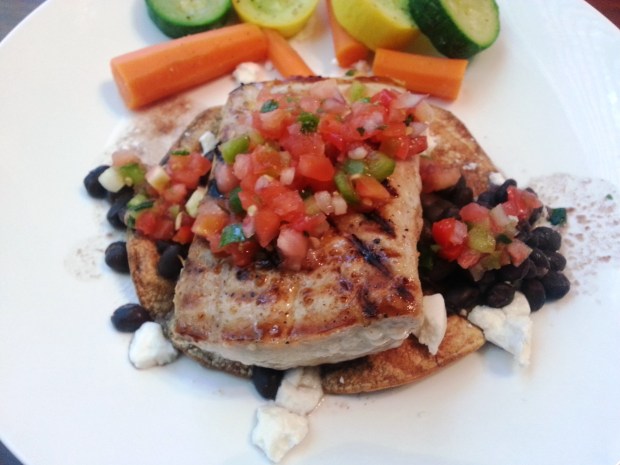
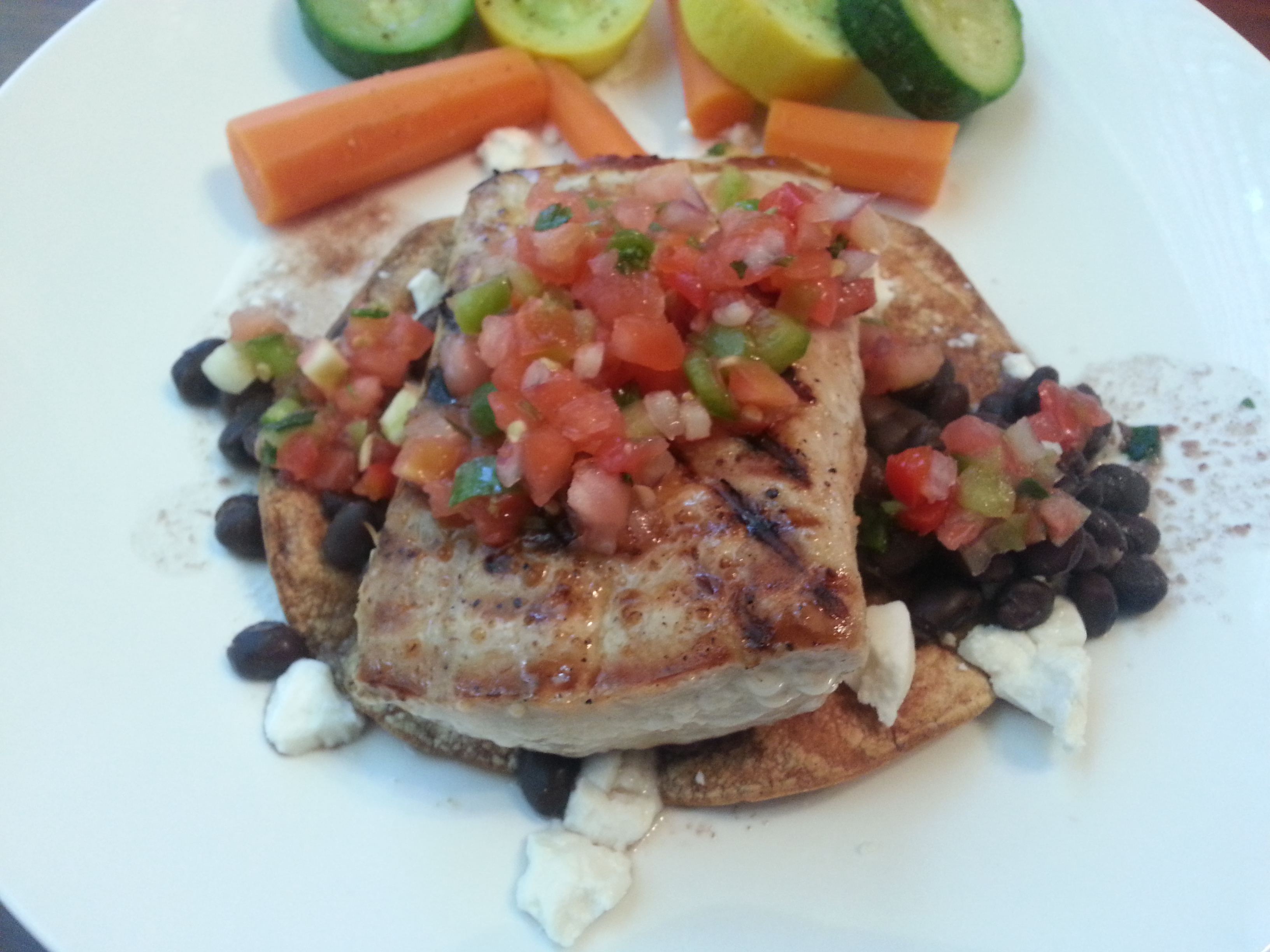
 My first night in Puerto Vallarta, I opted to eat at the hotel’s beachside restaurant. My waiter brought me a strong margarita on the rocks and a basket of bread, which I would have left untouched if were not for the two (okay, three) cheese straws that called out to me after a long day of traveling.
I opted for a lime-grilled Mahi-mahi with goat cheese and black bean sauce, followed by a shot glass-sized dessert involving chocolate and raspberries. Margarita in hand, I watched the sun set over Banderas Bay. Not a bad way to kick off a vacation, eh?
I expected black beans to be prevalent in Mexico, but they were actually a rarity, at least where I was eating. Here, I’ve bulked up this dish a bit by incorporating actual beans, and not just their cooking sauces. Serve with whatever vegetables are in season and look good at the market or from your garden.
This might sound overly complicated for a weeknight, but it’s really not. Make the tostadas over the weekend and store them in resealable zip-top bag. Reheat leftover simmered black beans from scratch, or used canned beans. Fresh salsa from the store and seasonal vegetables of your choice finish the dish nicely. All that remains is the fish itself, which cooks in under 10 minutes.
Grilled Mahi-Mahi, Goat Cheese Tostada and Black Beans
Inspired by Las Casitas Restaurant, Casa Magna Marriott, Puerto Vallarta
Serves 4
4 corn tortillas
Olive oil
1 1/2 cups simmered black beans with cooking liquid*
2 oz. goat cheese
4 boneless, skinless Mahi-mahi fillets (about 6 oz. each)
Salt & pepper
1 lime
Fresh salsa, for serving
Make the tostadas: Preheat the oven to 400 degrees. Brush the tops of the tortillas with a bit of olive oil and lay on a rimmed baking sheet. Bake until lightly browned, about 8 minutes. Remove from the oven and set aside. Make ahead: can be made a day or two ahead of time and stored in an airtight container.
Prepare the beans: Heat beans in a small saucepan over medium heat. Add additional cooking liquid if necessary. Taste; season as needed. *Note: If using canned beans: rinse and drain; place in a small pan and add about 2/3 cup water. Season with salt, pepper, cumin and cilantro. Heat to boiling; reduce heat and simmer. Taste; season with additional salt and pepper if needed. Keep warm.
Prepare the fish: If using an outdoor grill, prepare for direct, high-heat grilling. If indoors, heat a grill pan on medium-high heat; brush with olive oil. Pat the fish dry. Season generously with salt, pepper, and zest of the lime. Grill fish until opaque, about 3-4 minutes per side, turning once. Squeeze with lime juice.
To assemble: On each plate, break the tostada in half and place on the plate. Crumble the goat cheese on top. Ladle 1/3-1/2 cup bean mixture onto the tostada, including 2-3 tablespoons of cooking liquid. Place the grilled fish on the tostada. Top with fresh salsa. Serve immediately.

 red hair red wine