Recipes

Mini Salted Caramel and Chocolate Cream Puffs

Happy 2013, friends!

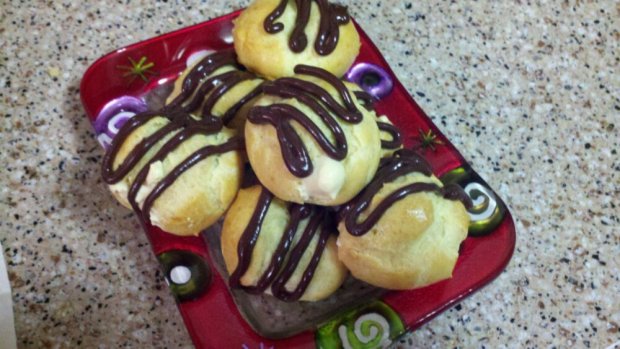
Bite-sized, salty-sweet treats, with just the right amount of chocolate

Bite-sized, salty-sweet treats, with just the right amount of chocolate

With New Year’s Eve fresh in my mind, and Super Bowl parties just around the corner, I have party food on the brain. Cream puffs are basically the perfect party dessert. If you make them 1″ or smaller, they’re a one-bit dessert and don’t need silverware. You can play with the flavors, and they look sophisticated and difficult but are actually pretty simple.

Cream puffs are made from pâte à choux, or cream puffy pastry dough. It’s also used to make éclairs, profiteroles, and cheese puffs — which all cover the same basic techniques, just with different shapes and fillings. An eggy dough is
cooked on the stove and then beaten with a mixer, and put in a hot oven to “puff.”

For the filling, sweetened whipped cream is a classic, no-fail choice. If you’re looking for a little more sass (and let’s face it, when is this redhead NOT looking for more sass?), folding something fun into the cream adds an unexpected twist. I used salted caramel sauce, but I think fruit or chocolate would great too.

For a small group, I think it would be fun to turn this into a hands-on, make-your-own dessert  — just set out a couple bottles of filling and chocolate, and let guests fill and top their own treats.
Push out as much of the water as possible on the stove, then transfer to a mixer.
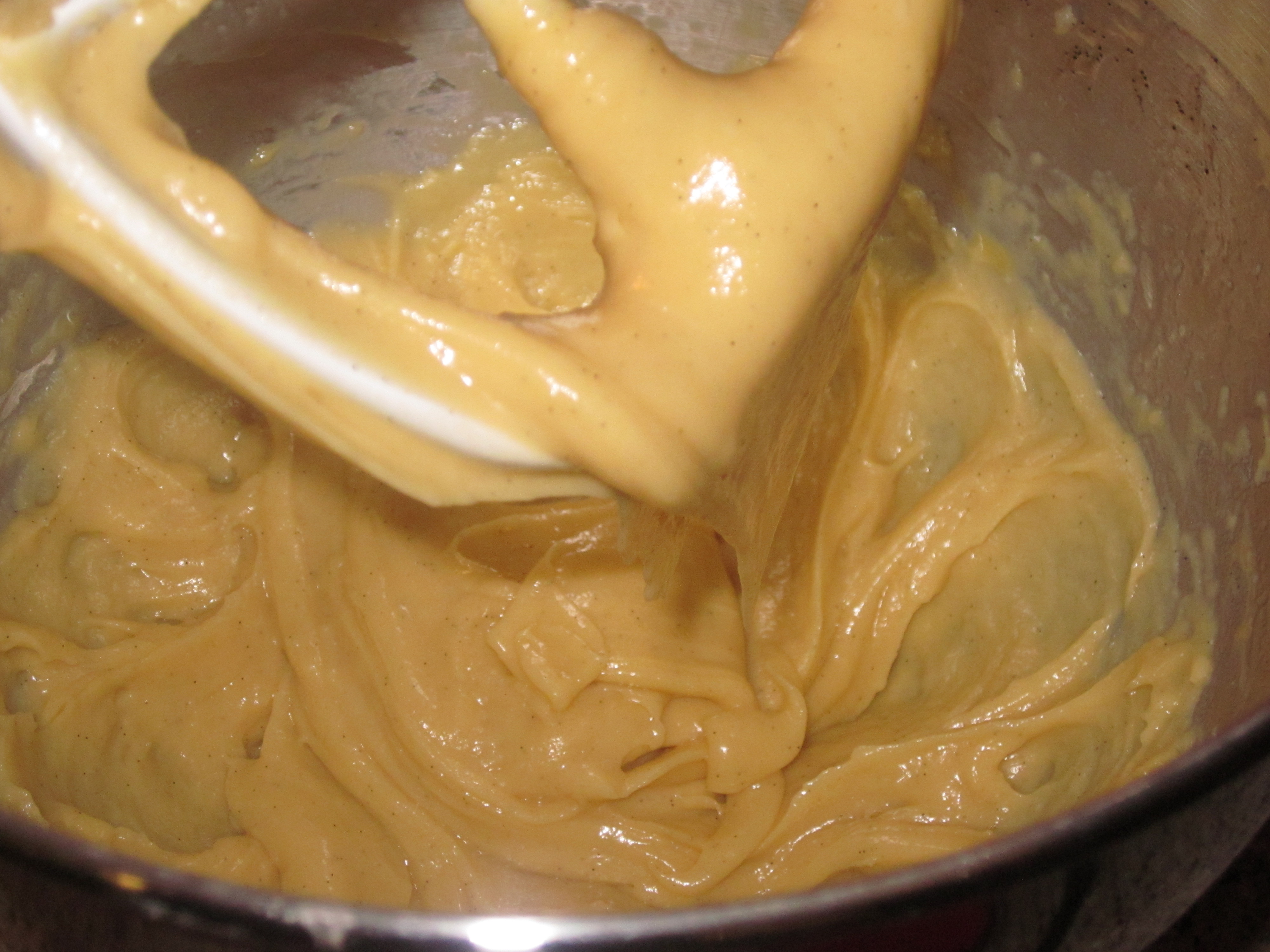
Push out as much of the water as possible on the stove, then transfer to a mixer.

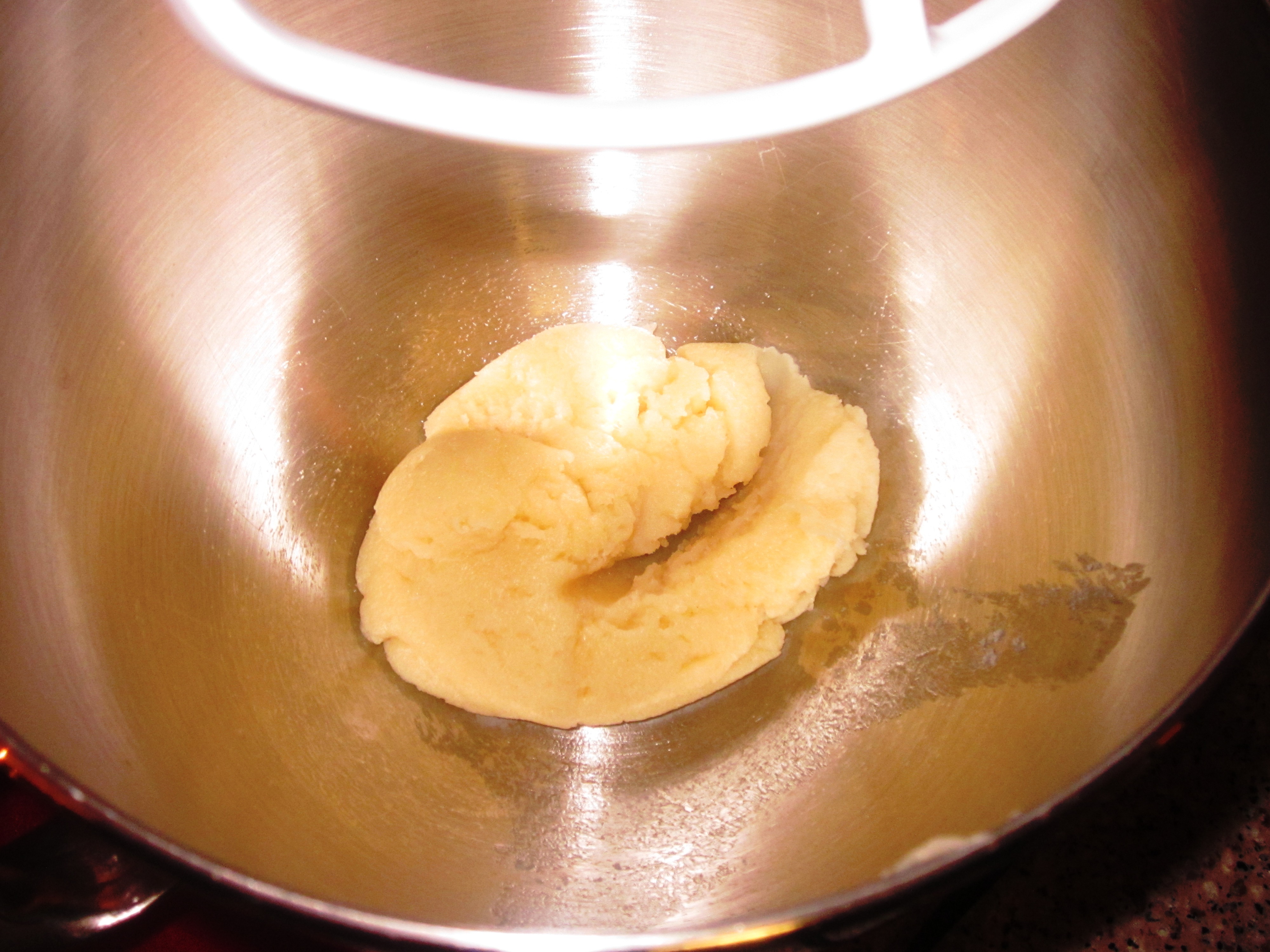
The dough is ready when it's shiny and creates ribbons.

The dough is ready when it’s shiny and creates ribbons.
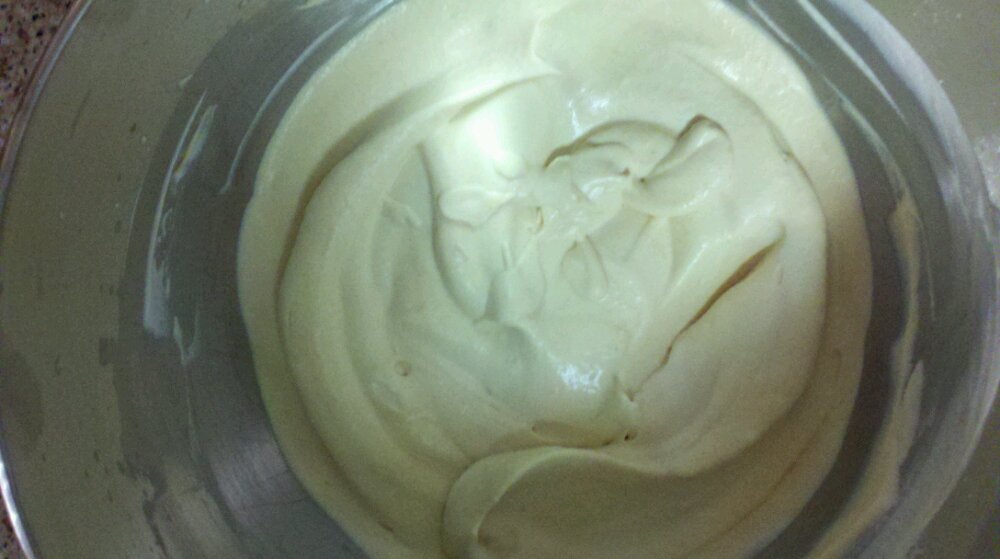
image

Gently fold caramel into whipped cream, then spoon into a pastry bag or squeeze bottle.
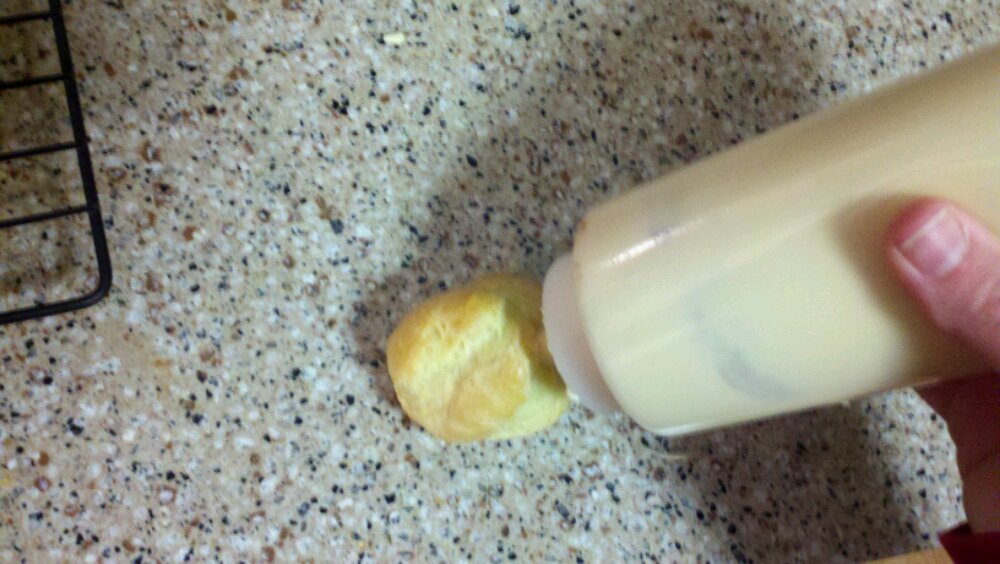
image

A squeeze bottle makes easy work of filling the puffs.
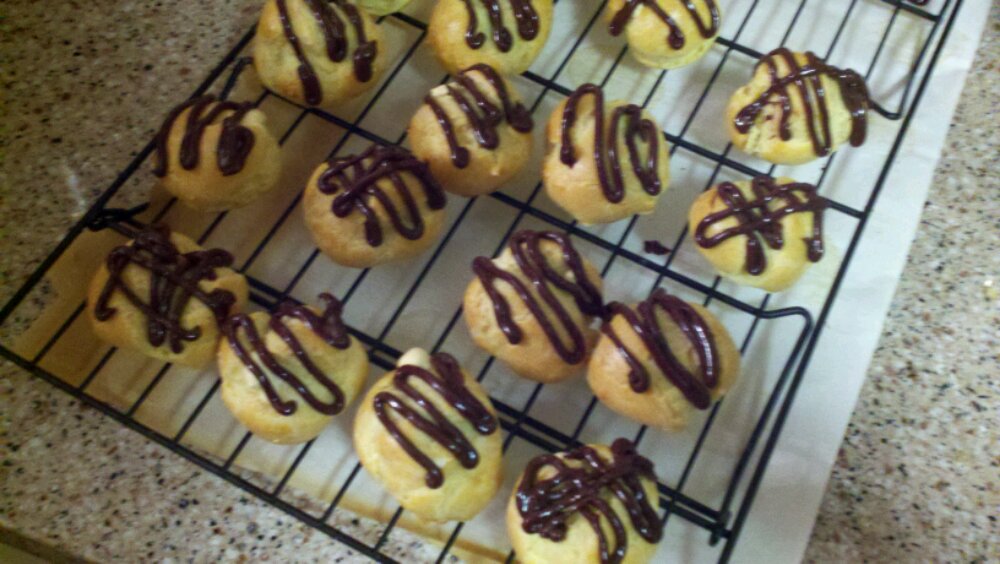
image

Drizzle or pipe chocolate on top.

Salted-Caramel Cream Puffs with Chocolate Sauce

Adapted from multiple sources

Yield: about 24 bite-sized puffs

Choux pastry:

1/2 cup + 1 Tbs water

1/4 cup (4 Tbs) unsalted butter, cut into small pieces

1/2 tsp sugar

1/4 tsp salt

1/2 cup + 2 Tbs all-purpose flour

1/4 tsp vanilla extract

3-4 large eggs, divided

Salted caramel filling:

1 1/4 cups heavy cream

3/4 cup salted caramel sauce, room temperature or slightly cooler

Chocolate sauce:

4 oz. dark chocolate, roughly chopped

1/4 cup heavy cream

1 Tbs unsalted butter

To make the pastry: Preheat oven to 400 degrees.  In a 2-quart saucepan over medium heat, combine water, butter, sugar, and salt. Bring to a boil. Remove from heat, and using a wooden spoon, quickly stir in the flour. Return the saucepan to the stove. Continue cooking and stirring so the dough holds together in a single mass and leaves a film of cooked flour adhering to the bottom and sides of the pan. The process takes only about 3 minutes and forces out as much water as possible.

Transfer the dough to a stand mixer fitted with a paddle attachment. Mix on low speed until slightly cooled, about 1 minute. Raise the speed to medium. Add the vanilla. The exact number of eggs will vary, but start with two. Add eggs, one at a time, until well-incorporated. The dough should have a shiny, smooth appearance, and pull away from the paddle. If necessary, add an egg white or full egg.

Transfer the mixture to a piping bag fitted with a 1/2” round tip, or use a 3/4” or 1” cookie scoop. Pipe or scoop rounds up to 1” onto baking sheets lined with parchment paper. Lightly smooth out the surface with a finger dipped in water; this will prevent burning.

Make an egg wash by mixing together 1 egg and 1 tablespoon water. Lightly brush the top of each puff with the egg wash. Bake the puffs for 12 minutes. Reduce the oven temperature to 375 degrees. Rotate the pans and continue baking until the puffs are lightly golden brown, about 12-14 minutes more. The puffs should feel light and fluffy. Immediately transfer from the baking sheets to wire racks to cool completely.

To make the salted caramel filling: in a stand mixture fitted with a whip attachment, add cream and whip until soft peaks form. Fold in the salted caramel sauce. Chill for 10 minutes. Transfer to a piping bag fitted with a 1/8” plain tip, or a squeeze bottle.

To make the chocolate sauce: Place the chocolate in a medium-sized mixing bowl. Heat the cream in a small saucepan over medium heat, bringing just to a boil. Pour over the chocolate. Add butter. Let the mixture sit for 2-3 minutes, then stir until smooth.

To assemble, poke the pastry bag or squeeze bottle into each pastry puff and pipe in the filling. Drizzle with chocolate. Cream puffs are at their best when baked and filled just before serving, but can be stored in the refrigerator for up to 1 day.
Salted Caramel Sauce

I hate — HATE — making mistakes. Failure? Nope. Not happening.

I’m not perfect, but I *am* a perfectionist. (There’s a difference, right?) I love the idea of continuous improvement. I’m very self-critical, but I also seek out feedback constantly, whether it’s at work, at the gym (where I teach group fitness), or in the kitchen. It’s nice to know what I’m doing well — we all want and need positive feedback — but I’m much more interested in whats not working and how I can do better.

When cooking, I especially love trying dishes that involve a new skill, technique, or ingredient. I embrace the learning process, and I never expect anything to turn out perfectly the first time. Hopefully, it’s edible, and in the second batch, I’ll have ironed out any kinks.

At least, that’s the usual plan.

Salted Caramel Sauce

Enter: Salted caramel sauce. I’ve worked with boiling sugar before, including to make marshmallows, fudge, and other candy. I needed salted caramel sauce for a recipe, and it seemed like I could easily knock it out on a weeknight. No big deal.

Oh, but it was. I tried different pots of different size and material. I tried different temperatures. I tried using a candy thermometer and I tried winging it. I made thick black goo, crunchy brown brittle, crunchy golden brittle, and the most delicious chewy caramels ever (which I couldn’t even tell you how to replicate).

Four batches, four failures.

FOUR!?!? I never screw up FOUR times!

At this point, I was fuming, but it was late and I was out of both ingredients and patience. Ego bruised, I walked away.

Two weeks later, I was perusing the latest issue of Bon Appetit, and happened to notice that one of the recipes included a salted caramel sauce. I compared the ingredients and a special technique primer. What I learned is that many recipes for caramel, including the one I was using, are not forgiving; they require precise equipment, temperature and timing. One misstep, and you’ll either burn the sugar (see: thick black goo), or crystallize the sugar (see: brittle).

“For a smooth, anxiety-free caramel, every time,” BA recommends adding cream of tartar, which is acidic and stabilizes the sugar.

Sweet, salty victory.

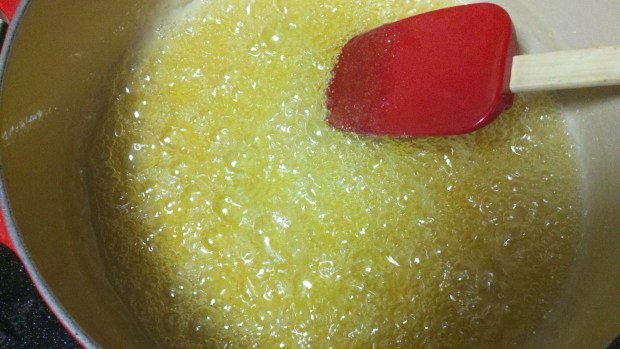
Once the sugar dissolves, put the spatula away until it begins to caramelize.

Once the sugar dissolves, put the spatula away until it begins to caramelize.

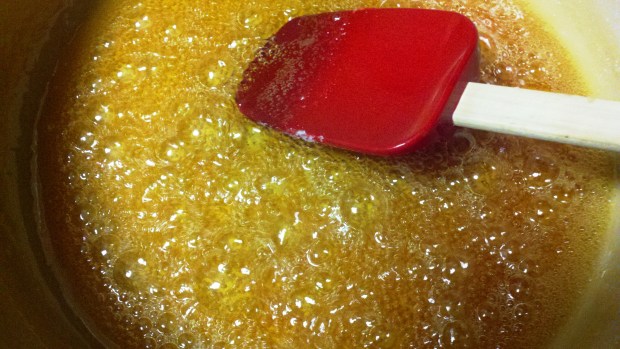
The mixture progresses from honey to amber very quickly. Watch it carefully.

The mixture progresses from honey to amber very quickly. Watch it carefully.

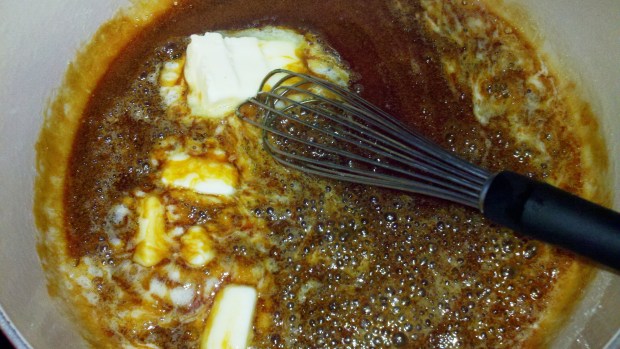
Turn off the heat and carefully stir in the butter. The mixture will get very bubbly.

Turn off the heat and carefully stir in the butter. The mixture will get very bubbly.

Salted Caramel Sauce

Adapted from Bon Appetit

Yield: about 1 1/4 cups

1 cup sugar

1/8 tsp cream of tartar

3 Tbs water

1/4 cup unsalted butter, cut into pieces

1/2 cup heavy cream

1 tsp kosher salt

Choose a heavy-bottomed saucepan with high sides, as the mixture will bubble up. Whisk together sugar, cream of tartar, and water. Bring to a boil over medium-high heat. As the mixture comes to a boil, the sugar will dissolve. Stir once with a heatproof spatula.

Keep watch as the mixture boils, but do not stir. Once you see it start to caramelize in spots, stir again to ensure even caramelization. When the mixture is the color of honey (about 10 minutes), lower the heat to medium-low, to give yourself more control. When the color reaches a deep amber color (about 5 minutes more), turn off the heat.

Note: cooking times can vary considerably. Stay close and judge with your eyes, not the clock.

Remove caramel from heat. Carefully whisk in butter (mixture will bubble vigorously), then whisk in cream and salt. Let cool slightly in pan, then pour into a heat-proof bowl or jar.

Cider-Brined Turkey

This post probably would have been more useful to you about a month ago, as you were prepping for Thanksgiving. Sorry, my bad.

It’s just that doing so would have meant making a turkey around Halloween, and I just wasn’t ready for that (not to mention, it seemed a little obnoxious to be thinking about turkey while millions of people were still without power after Hurricane-turned-Superstorm Sandy). Plus, I live alone, and that’s just way too much turkey.

I’m hoping you’ll overlook this indiscretion and and, if turkey is making an appearance on your holiday table this year, you’ll consider this version. I think you’ll be pleased.

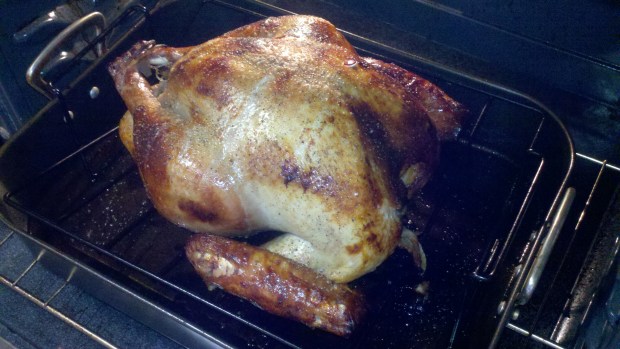
Roasted turkey

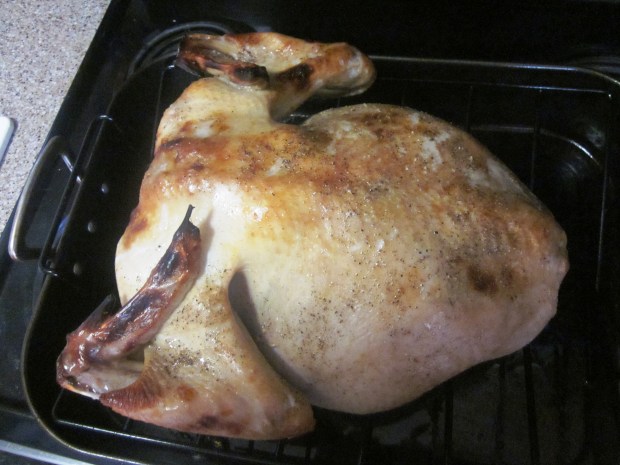
Roast the turkey breast-down under high heat, then reduce the temperature and flip the bird

I made this on my first Thanksgiving on my own, 2004, and it’s been the centerpiece of my holidays ever since. The combination of brine and a high-heat roast keeps the meat juicy and flavorful. If you’re just making a turkey breast, cut the recipe in half.

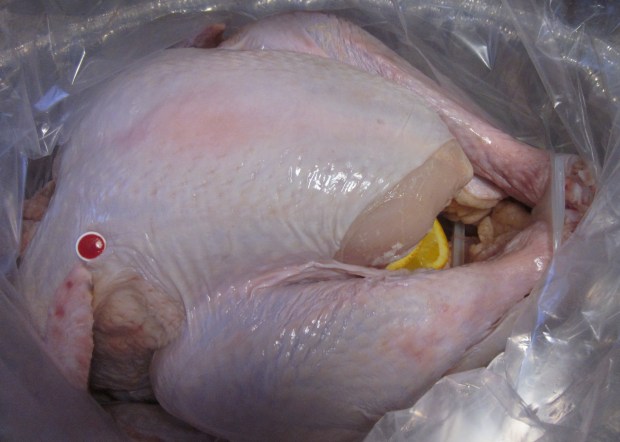
Brine

Brining imparts flavor and moisture. Use a double layer of oven bags to prevent messy leaks in your refrigerator.

IMG_2318

The turkey starts breast-down under high heat

IMG_0867

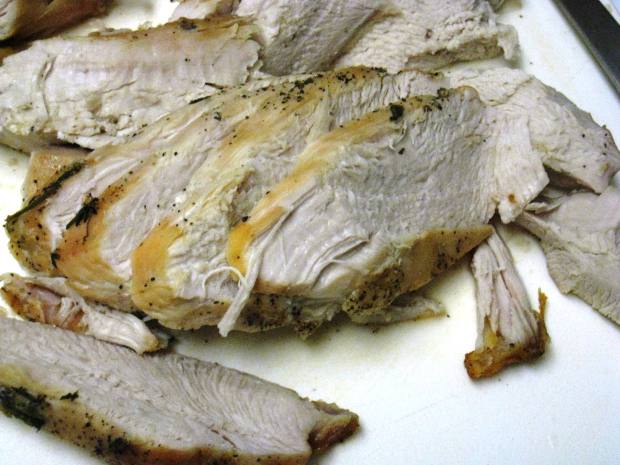
Carved turkey breast is devoured quickly

Apple Cider-Brined Turkey

Adapted from Cooking Light

Serves 12

8 c apple cider

2/3 c kosher salt

2/3 c sugar

1 Tbs black peppercorns, coarsely crushed

1 Tbs whole allspice, coarsely crushed

8 1/8″ thick slices peeled fresh ginger

6 whole cloves

2 bay leaves

1 12-pound fresh or frozen turkey, thawed

2 oranges, quartered

6 cups ice

2 Tbs butter, melted, divided

1 tsp freshly ground black pepper, divided

1/2 tsp salt, divided

Special equipment: 2 turkey-sized plastic oven bags

In a large saucepan, combine first 8 ingredients (through bay leaves). Bring to a boil; cook until sugar and salt are dissolved, about 5 minutes. Cool completely.

Remove giblets and neck from turkey. (Reserve for gravy, if desired.) Rinse turkey with cold water; pat dry. Trim excess fat. Stuff body cavity with orange quarters. Place a turkey-sized oven bag inside a second bag to form a double thickness. Place bags in a large stockpot. Place turkey inside inner bag. Add cider mixture and ice. Secure bags with several twist ties. Refrigerate for 12-24 hours, turning occasionally.

Preheat oven to 500 degrees.

Note: now would be a good time to disable your smoke detector and open multiple windows.

Remove turkey from bags. Discard brine, orange quarters, and bags. Rinse turkey with cold water; pat dry. Lift wing tips up and over back; tuck under turkey. Tie legs together with kitchen string. Place roasting rack in pan, and arrange turkey, breast side down, on roasting rack. Brush turkey back with 1 tablespoon butter; sprinkle with 1/2 teaspoon pepper and 1/4 teaspoon salt. Bake at 500 degrees for 30 minutes.

Reduce oven temperature to 350 degrees. Remove turkey from oven. Carefully turn turkey over (breast side up) using tongs. Brush turkey breast with 1 tablespoon butter; sprinkle with 1/2 teaspoon pepper and 1/4 teaspoon salt. Bake at 350 degrees for 1 hour and 15 minutes. If the turkey is browning too quickly, shield the turkey with foil. Insert a thermometer into the meaty part of the thigh, making sure not to touch bone. The thermometer should read 170 degrees.

Remove the turkey from the oven; let stand 20 minutes.