Main Dishes

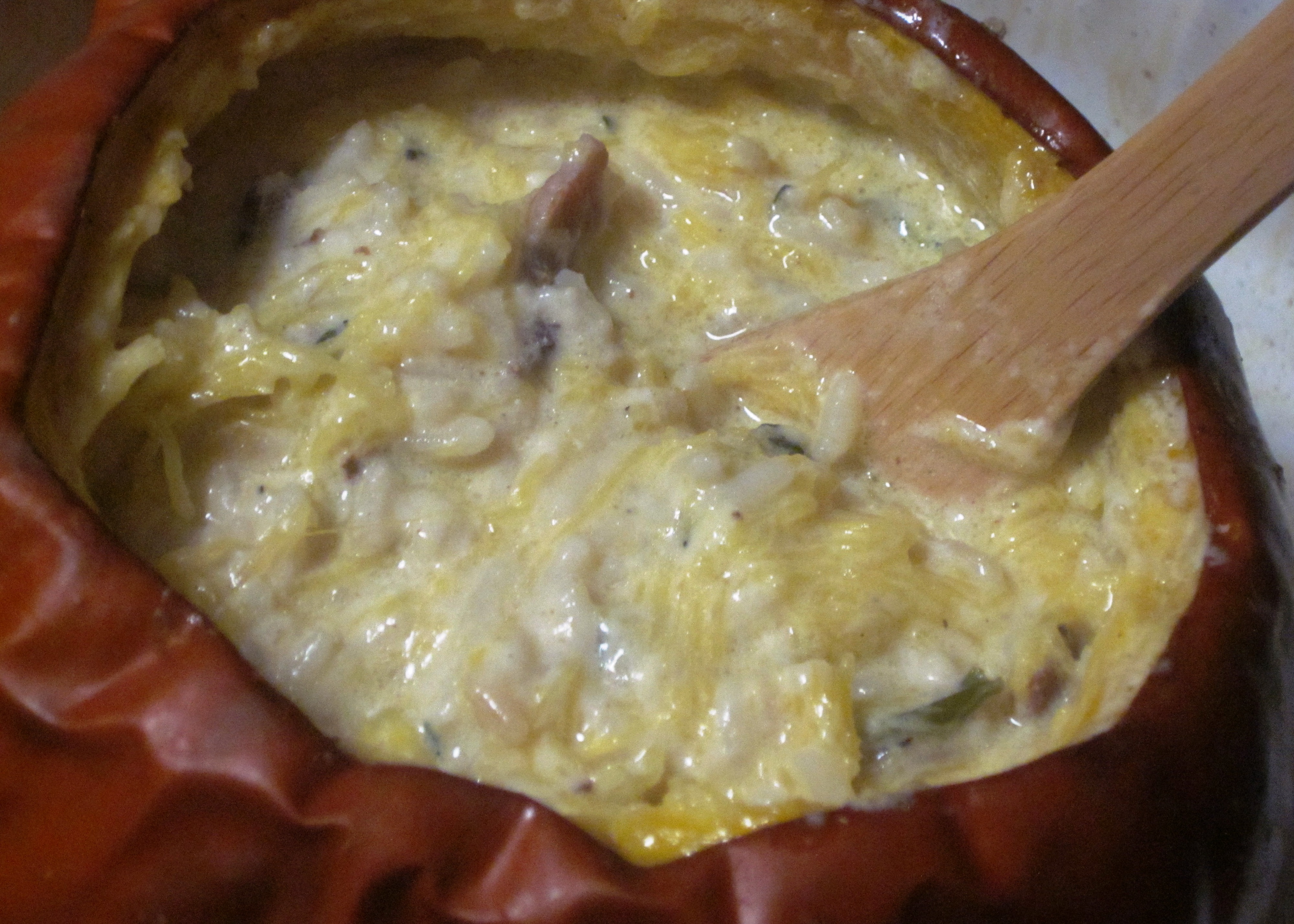
Pumpkin Stuffed with Everything Good

Pumpkin Trifecta Day, Recipe #2.

I have a soft spot for pumpkins. I also have a soft spot for the folks over at Bon Appetit’s The Feed. Not only do they keep me in a constant state of inspiration with their posts, they also regularly review and give away cookbooks.

Last fall, I was a lucky winner, and as it happened, I already owned the cookbook I’d won — the review was that good, I’d already gone out and bought it. I casually mentioned to the sweet editor who contacted me that I owned the cookbook, and was there any possibility of switching?

“Yes, we could give you a different cookbook. I have a gazillion ones sitting in front of me. Want to give me an idea of what you’re looking for and I can suggest some titles?”

Enter Dorie Greenspan. I’d been swooning over Around My French Table for awhile, and had recently come across one of the featured recipes, “Pumpkin Stuffed with Everything Good.” If even a dozen recipes looked half as good as that one, I knew it would be right up my alley.

The editor agreed, and a few days later, a big, beautiful hardcover cookbook with gorgeous photos and mouthwatering recipes was sitting on my coffee table, just waiting for me to dive in.

So far, “Pumpkin Stuffed with Everything Good” is still my favorite recipe from the book. It’s really more of an outline than a recipe, meant to be adapted as the mood strikes you.

This slideshow requires JavaScript.

The original recipe calls for stale bread, but I like cooked rice for the risotto-like end product. Dorie also suggests adding cooked sausage or ham, nuts, chunks of apples or pears, or cooked vegetables such as kale, spinach or chard. These all sound absolutely perfect.

You have choices for serving, too: cut wedges of the pumpkin and filling; spoon out portions of the filling, making sure to get a generous amount of pumpkin; or dig into the pumpkin with a big spoon, and pull the pumpkin flesh into the filling and mix it all up. Serve with a salad as a cold-weather main course, or as the perfect fall side dish. It’s a worthy addition to any Thanksgiving table. Omit the bacon, and it’s also vegetarian.

Pumpkin Stuffed with Everything Good

Adapted from Around My French Table, by Dorie Greenspan (Houghton Mifflin Harcourt, 2010)

Makes 2 very generous servings or 4 small servings

1 sugar pumpkin, about 3 pounds

Salt and pepper

1 1/2 to 2 c cooked rice

1/4 lb cheese, such as Gruyere, Emmental (Emmenthal), cheddar or a combination, cut into 1/2-inch pieces (I used Trader Joe’s Emmental)

4 strips bacon, cooked until crisp, drained, and crumbled (I used Trader Joe’s applewood smoked bacon)

1/4 c snipped fresh chives

1 1/2 tsp minced fresh thyme

1/3 to 1/2 c cream

Pinch of nutmeg

Center a rack in the oven and preheat the oven to 350 degrees. Line a heavy-duty baking sheet with a baking mat or parchment, or use a Dutch oven or casserole dish slightly larger than the pumpkin, coated with butter, oil or cooking spray.

Wash and dry the pumpkin. Using a sturdy, sharp knife, cut a cap out of the top of the pumpkin at a 45-degree angle (like carving a jack-o’-lantern). Clear away the seeds and strings from the cap and the inside of the pumpkin. (I like to use an ice cream scoop). Season the inside of the pumpkin generously with salt and pepper. Put the pumpkin on the baking sheet or in the pot or casserole.

In a bowl, toss together the filling ingredients (everything except the cream and nutmeg). Season with pepper. (Note: you can also add salt to the filling, but the cheese and bacon may make it salty enough; be sure to taste it first.) Pack the filling into the pumpkin. The pumpkin should be well-filled; you might have a little too much filling, or you might need to add to it. Stir the nutmeg into the cream and pour into the pumpkin to moisten the ingredients. You don’t want the ingredients to swim in cream; the pumpkin will exude some additional liquid while cooking.

Put the cap in place and bake the pumpkin for 90-120 minutes, checking at 90 minutes. Everything inside the pumpkin is bubbling, and the flesh of the pumpkin should be tender enough to be easily pierced with a fork. If desired, remove the cap during the last 20-30 minutes so that the liquid can bake away and the top can brown a little.

Carefully transfer the pumpkin to a serving platter or to your table.

This dish is best eaten immediately. Scoop out any leftovers, mix them up, cover and chill; reheat the next day.
Lemon Honey Roasted Chicken

Chicken leg quarters are a great addition to the home cook’s weekend repertoire. They’re economical, and I often find them more flavorful than boneless, skinless chicken breasts.

I first came across this recipe in the Washington Post while reading an account of the challenges of cooking and eating in a home you’re trying to sell (nix garlic and pungent foods; bake some cookies!). Indeed, two of the best parts of this recipe: it doesn’t use a lot of dishes, and it makes the house smell divine. Leftovers make for a great lunch.

The original recipe calls for chicken drumsticks and thighs, which I would use when feeding a group or kids; when cooking for one or two people, leg quarters seem a little less fussy to me. The original also uses haricot verts, which are green beans’ skinnier, more delicate (and more expensive) cousin. Use them if you can find them, but green beans are a fine substitute.

The Post suggests serving it with crusty bread for soaking up pan juices. I also like it with potatoes or sweet potatoes, or a green salad.

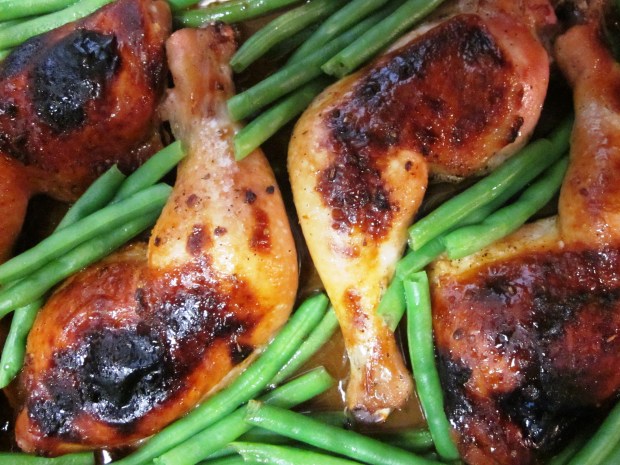
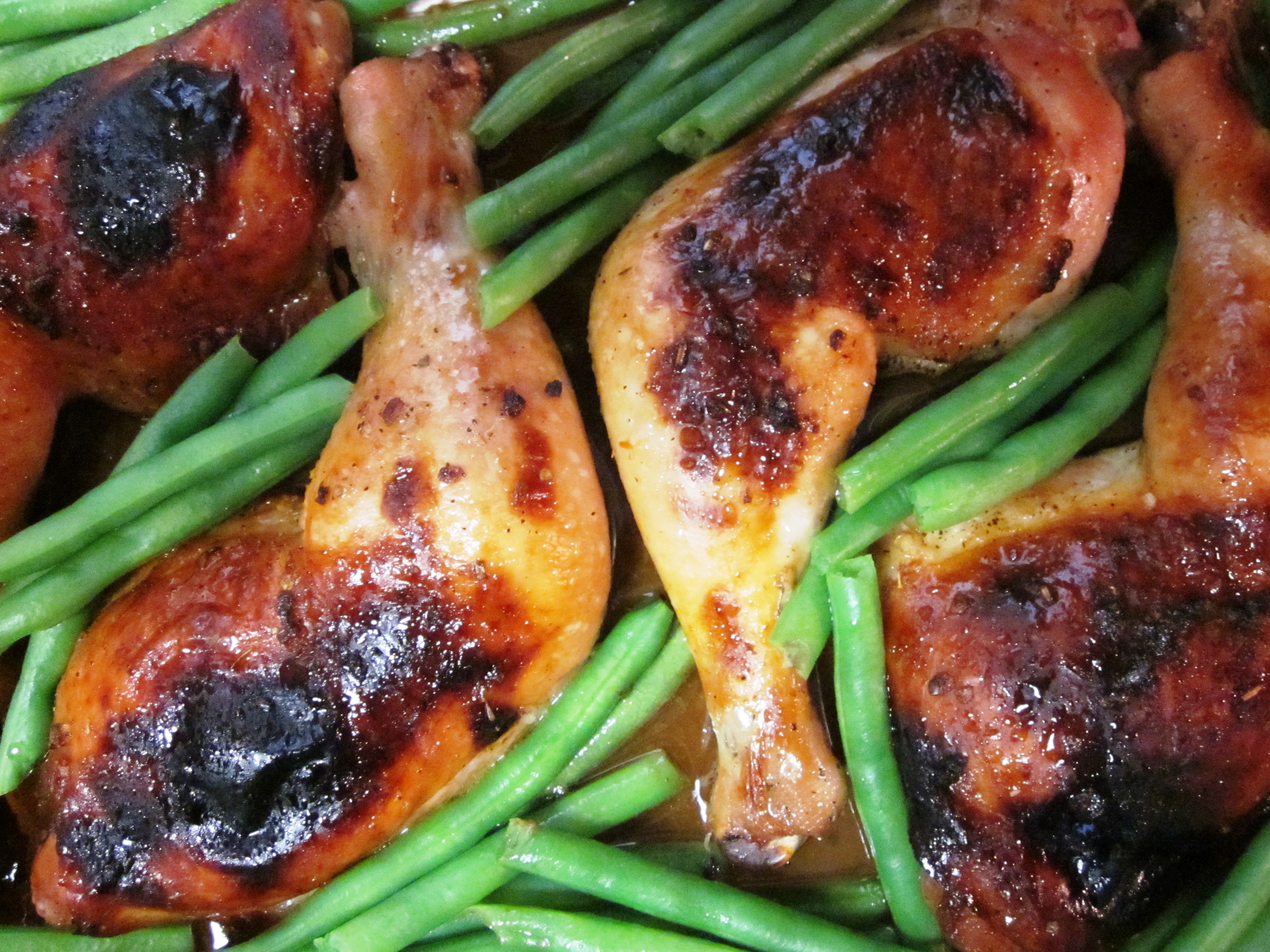
Lemon Honey Roasted Chicken

Adapted from The Washington Post, April 11, 2012

Freshly squeezed juice of 2 lemons (1/3 to 1/2 cup)

1/4 cup honey, divided

1 Tablespoon chopped fresh oregano

3 cloves garlic, minced (optional)

3 Tablespoons olive oil

4 chicken leg quarters

Kosher or sea salt and black pepper

1/4 cup cool water

12 oz. green beans (or use harictos verts, if you can find them)

Combine the lemon juice, 2 tablespoons of the honey, the oregano, garlic and oil in a gallon-sized resealable plastic food storage bag. Massage the bag from the outside to combine the contents. Add the chicken; season with salt and pepper to taste. Seal the bag, pressing as much air out as possible. Massage to work the marinade into the chicken. Let sit for 30 minutes to 1 hour (refrigerate if desired).

Preheat the oven to 375 degrees. Have a 9-by-13-inch baking dish or roasting pan at hand.

Arrange the chicken pieces skin side up in the pan, keeping as much of the marinade on them as possible. Discard the remaining marinade. Pour the water around the chicken. Drizzle the remaining 2 tablespoons of honey evenly over the chicken. Roast for 45 minutes, turning the dish or pan from front to back halfway through the cooking. The chicken should be cooked through and browned in spots.

Meanwhile, bring a medium pot of salted water to a boil over high heat. Blanch the green beans for about 1 minute, then drain and rinse under cool water to stop any carryover cooking.

Add the haricots verts to the baking dish or pan, snuggling them into the pan juices and around the chicken in small bunches. Return to the oven and roast for 5 minutes.

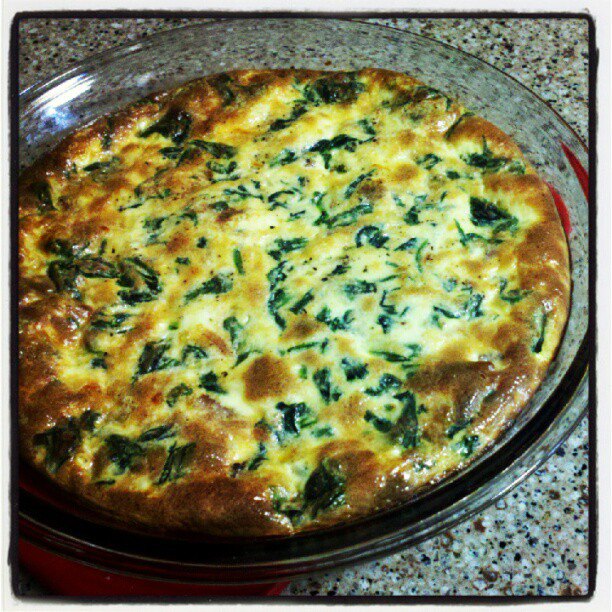
Bacon Spinach Quiche

I am not a morning person, and I am always looking for make-ahead breakfast ideas.

If I don’t get enough protein in the morning, I am invariably famished and sneaking down to the ABP in the basement of my office building for a sugary carb fix before 10:30.

Quiche seemed like a great solution: versatile (what leftover veggies are in mt fridge?), with protein and vegetables, as well as portable. Leave off the crust, and they’re pretty guilt-free.

But I’ve been experimenting with quiche recipes off on and on for about six months, and they always turn out watery. Turns out, eggs release water when they cook, without the right balance of fat in the liquid. You can’t substitute milk or half and half for the cream. Vegetables should be pre-cooked and sufficiently drained of excess moisture, especially for a very watery vegetable such as zucchini. Also, oven temperature matters: 400 degrees seems to work best.

This recipe is a starting point; substitute whatever vegetables and cheese you have on hand. A little salt is good, but be careful not to over-salt, especially if you’re using a salty cheese such as Parmesan.

Many cooks prefer to make quiche in a tart pan, and remove the sides when cooling. I don’t own a tart pan, so I just use a pie plate. This may be too much filling for a tart pan; start with 2 eggs and 2/3 c cream.

Bacon Spinach Quiche

4 slices thick-cut bacon (I used Trader Joe’s applewood-smoked bacon)
1 small onion, diced
2 cloves garlic, minced, if desired
4 c baby spinach (half a package)
3 eggs
1 c cream
Salt & pepper to taste
1/4 c shredded Parmesan (or to taste)

Preheat oven to 400 degrees.

In a large skillet, cook bacon. Remove bacon to a plate lined with paper towels to drain the fat; crumble. Remove all but one tablespoon of grease from the pan. Reduce heat to low. Add onions and saute for several minutes. Add garlic and continue sauteeing until onions begin to get translucent. Add spinach. Cook for an additional two minutes until spinach has cooked down. Transfer mixture to a cutting board to cool slightly. Run a knife through the mixture several times. Blot excess moisture from the vegetables with paper towels.

Lightly coat a pie plate with cooking spray. Spread bacon crumbles and spinach over the plate. Whisk together eggs, cream, salt and pepper; pour into pie plate. Sprinkle with cheese.

Place pie plate on a baking sheet and carefully slide into the oven. Bake at 400 degrees for about 30 minutes, until the filling has uniformly puffed (wait for the center to puff), browned and set. Transfer to a cooling rack. Let set for at least 5 minutes before serving.